Why a Ceramic Salt and Pepper Grinder Beats Every Other Kind
If you've ever grabbed a grinder mid-cook, twisted it, and gotten almost nothing out — you already know the problem. A lot of grinders look the part and fail at the actual job. The ceramic salt and pepper grinder fixes that at the root. Ceramic mechanisms don't rust, don't dull, and don't react with whatever you're grinding. They just work, meal after meal, year after year. Once you understand what's inside the grinder you're using, it's hard to go back to anything less.

What Makes Ceramic Different From Steel or Plastic?
Most budget grinders use a steel grinding mechanism. Steel works fine — until it doesn't. Salt is corrosive. Even a small amount of moisture in the air can cause a steel burr to rust, and once that happens, your salt starts picking up a metallic edge. You might not even notice it consciously, but something tastes off.
Ceramic burrs are non-reactive. They're made from hardened ceramic rings that crush peppercorns and salt crystals between them without ever interacting with the seasoning itself. The flavor stays clean. And unlike steel, ceramic doesn't dull — a good ceramic mechanism holds its edge for years of daily grinding without needing any adjustment or replacement.
Plastic mechanisms are a different story entirely. They're cheap, they crack, and they handle coarser salt and peppercorns poorly. If you've ever noticed a grinder producing uneven output — some dust, some whole peppercorns that escaped completely — it was almost certainly plastic.
The Grinding Experience Actually Matters
There's a physical satisfaction to a well-built grinder that's hard to describe until you've used one. The mechanism engages smoothly, the resistance feels right, and what comes out is consistent — whether you want a fine powder for a sauce or a coarser crack for finishing a steak.
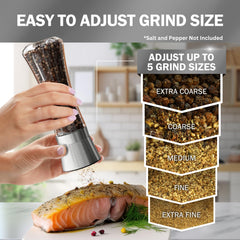
A ceramic burr gives you control over that coarseness. Most quality grinders let you adjust the grind setting by tightening or loosening the top cap. Fine setting for table salt or baking-adjacent use. Medium for everyday cooking. Coarse for bold seasoning or finishing dishes where texture matters.

That range matters more than people realize. Pre-ground pepper goes stale fast — the volatile oils that give it aroma and heat dissipate within weeks of grinding. When you grind whole peppercorns fresh over a pan or a plate, the difference is immediate. A ceramic grinder with a properly calibrated burr makes that easy.
What to Look For When You're Shopping
The mechanism is the most important spec, but there are a few other things worth checking before you buy.
Body material. Glass is excellent — you can see fill levels at a glance and it doesn't absorb odors. Acrylic is lighter and shatter-resistant, which matters if you cook with kids around. Wood looks beautiful but needs careful drying to avoid cracking or warping near moisture.
Height. Taller grinders hold more and feel easier to use over a pot or pan. Shorter ones are better for the table, where a compact footprint reads as cleaner and less cluttered. Neither is objectively better — it depends on how you actually cook and serve.
Fill opening. This sounds minor until you're trying to funnel Himalayan pink salt through a tiny hole at the bottom of a grinder. A wide fill opening saves a lot of frustration at refill time.
Cap fit. A cap that wobbles or loosens over time is one of the most common grinder failure points. Twist the top before you buy if you can, or check reviews specifically for this. A cap that stays seated properly means you never end up with a lapful of pepper.
What to Actually Fill Them With
For salt: whole sea salt crystals or Himalayan pink salt work best in a ceramic grinder. Avoid fine table salt — it doesn't need grinding, and it can clump inside the mechanism. Coarse kosher salt is fine but grinds faster than you might expect, so you'll refill more often.
For pepper: whole black peppercorns are the classic choice and grind beautifully. White peppercorns are milder and work well if you cook dishes where you don't want visible flecks. Tellicherry peppercorns are worth seeking out — they're larger, more aromatic, and noticeably more complex than standard black pepper.
One thing to skip: pre-mixed spice blends with anything oily or sticky inside the grinding mechanism. They can gum up the ceramic burr over time, and they're much harder to clean out than straight salt or pepper.

The Right Set Earns Its Counter Space
A grinder that sits in a drawer doesn't get used. The ones that stay out — that earn permanent counter space — tend to be the ones that look as good as they work. Finish matters here, not just aesthetics but also how a grinder reads in the context of your kitchen.
A gold-top grinder pairs easily with warm kitchens — butcher block, brass hardware, earthy tones. Gunmetal or matte black reads cleaner in modern or industrial spaces. If your kitchen runs neutral and you want something understated, a clear glass body with a simple metal top disappears into the background in the best way.

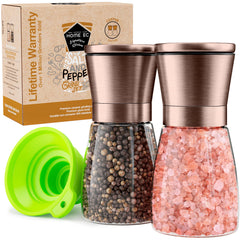
Home EC Salt and Pepper Grinder Set 2pk-Tall Gold Top
Tall glass bodies with a warm gold-finish top — the ceramic burr mechanism adjusts easily for coarse to fine grinding, and the clear barrel means you always know when it's time to refill.
Shop Now →If you cook for a crowd regularly or like to keep one set in the kitchen and another on the table, a four-pack makes a lot of sense. Having a dedicated salt grinder and pepper grinder for cooking — where they're used heavily — plus a cleaner set for serving is a small habit that makes meals feel more considered.

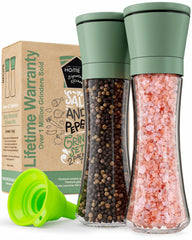
Home EC Salt and Pepper Grinder Set 4pk - Tall
Four tall grinders with ceramic mechanisms — enough to keep one pair in the kitchen for cooking and one on the table for serving, so neither set gets worn out doing both jobs.
Shop Now →How Long Should a Ceramic Grinder Last?
A good ceramic burr mechanism, used normally, should last several years without any degradation in grinding performance. The ceramic itself doesn't wear the way steel does. What usually fails first in a well-made grinder is the cap fitting or the acrylic body cracking — not the mechanism.
If your grinder starts producing inconsistent output after a while, the first thing to check is whether something sticky got into the mechanism, or whether the adjustment setting has slipped. Both are easy to fix. Rinse the mechanism with warm water (no soap — it can leave residue that affects flavor), let it dry fully, and recalibrate the grind setting. That handles most issues.
The ceramic salt and pepper grinder isn't a flashy upgrade — it's a quiet, practical one. But when you use something every day, practical and well-made starts to feel like a luxury. Get the mechanism right, choose a finish that suits your kitchen, and you'll stop thinking about grinders entirely. Which is exactly the point.
Related Posts
The Best Salt and Pepper Grinder Gift Set for Every Person on Your List
Glass Salt and Pepper Grinders: What to Look For, What to Avoid, and Which Ones Are Worth It