How to Open, Fill, and Clean a Salt and Pepper Grinder (So It Works Like New Every Time)
Most people buy a salt and pepper grinder, use it for a few weeks, and then quietly wonder why it's grinding unevenly — or barely grinding at all. The answer is almost always simple: the grinder needs fresh salt or peppercorns, a quick reassembly check, or a proper clean. Knowing how to open, fill, and clean a salt and pepper grinder takes about ten minutes the first time you do it, and then it becomes second nature.

This isn't complicated. But it does require knowing what you're working with — because not all grinders open the same way, and using the wrong salt or the wrong technique can turn a great grinder into a frustrating one.
How to Open Your Salt and Pepper Grinder
The most common design you'll encounter is the adjustable-top grinder: the mechanism sits at the top, and the body holds the salt or pepper below. To open it, you unscrew the top cap. That's it. Turn it counterclockwise until it lifts off, and the grinding head comes with it.
Some grinders have the mechanism at the base instead — you flip them upside down to fill them. If you're not sure which style yours is, look for a seam or cap at one end. A gentle twist will tell you everything.
One thing worth knowing: the small nut on top of many grinders also controls coarseness. Tighten it for a finer grind, loosen it for coarser. Don't unscrew it all the way by accident when you're just trying to refill — keep track of how many turns you're making so you can return it to your preferred setting.
What to Fill It With (And What to Avoid)
For pepper grinders, whole peppercorns are the only right answer. Pre-ground pepper clogs the mechanism and defeats the whole purpose of grinding fresh. Black, white, or mixed peppercorns all work — just make sure they're whole and dry.
Salt grinders are a little more particular. Coarse sea salt or Himalayan pink salt works beautifully. Fine table salt is a hard no — it's too small for the mechanism to grip, so it either pours straight through or clumps up and jams. Stick with coarse crystals and you'll never have a problem.

Also avoid anything with added moisture — flavored salts with wet ingredients or any spice blends that have been exposed to steam. Moisture is the enemy of a smooth-grinding mechanism. Keep your refills dry and coarse, and the grinder will reward you every single time.
How to Fill a Salt or Pepper Grinder Without Making a Mess
Once the top is off, the body of the grinder is essentially a tube. Pour your salt or peppercorns straight in — a small funnel helps if you're working with fine crystals, but it's usually not necessary for whole peppercorns.
Don't fill it all the way to the rim. Leave about a quarter inch of space at the top so the mechanism sits back in cleanly without crushing or jamming your contents. Then screw the cap back on, check your coarseness setting, and you're done.

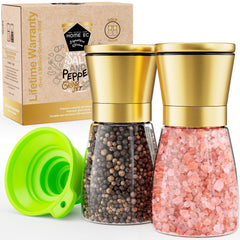
Home EC Salt and Pepper Grinder Set — Tall Gunmetal Top
The top-fill design on these tall gunmetal grinders makes refilling genuinely easy — unscrew, pour, done. The adjustable ceramic mechanism handles everything from coarse flakes to fine grinds without skipping a beat.
Shop Now →How to Clean a Salt and Pepper Grinder Properly
Here's the rule that surprises most people: don't wash your grinder with water. Especially not the mechanism. The grinding burrs — usually ceramic or stainless steel — can corrode or warp if they're submerged or soaked, and moisture left inside the body causes salt to harden into a solid block.
Dry cleaning is the way to go. Open the grinder, empty any remaining contents into a bowl, and tap the body gently against your palm to shake out the loose debris. Then take a dry pastry brush or a small cleaning brush and sweep out the interior. You'd be surprised how much fine dust and residue collects in there.
For the mechanism itself, brush the burrs the same way — work the bristles in between the grinding surfaces to clear any packed salt or pepper residue. A wooden skewer or toothpick helps dislodge anything stubborn. Don't force it; just work gently and let the brush do the job.

If your grinder has a glass or acrylic body, you can wipe the outside with a slightly damp cloth — just keep the moisture away from the cap and mechanism. Metal bodies can be wiped down the same way and dried immediately.
How Often Should You Clean and Refill?
For a household that cooks most nights, a quick brush-out every two to three months keeps things running smoothly. A full refill depends on how often you cook — most people refill their pepper grinder every few weeks and their salt grinder a bit less often, since salt tends to be used more sparingly in a grinder format.
If you notice grinding resistance, uneven output, or a faint stale smell when you grind, that's your cue. A five-minute clean and a fresh refill fixes all three problems almost every time.

Home EC Salt and Pepper Grinder Set — Tall Diamond Facet
The faceted body gives you a solid grip during filling and cleaning, and the clear acrylic midsection makes it easy to see exactly when you need a refill — no guessing, no surprise empty grinds mid-meal.
Shop Now →A Few Habits That Make Everything Easier
Store your grinders in a cool, dry spot away from the stove. Steam from boiling water is the fastest way to harden salt inside the mechanism and make your next fill-and-clean session a lot more work than it needs to be.
When you refill, use the same type of salt or pepper you started with. Mixing coarse sea salt with fine table salt mid-grinder, for instance, creates inconsistent grinding and eventually a clog. Keep it consistent and the mechanism stays happy.
And don't wait until the grinder is bone-empty to refill it. Grinding on the last few kernels puts more strain on the mechanism than it needs. Top it up while there's still a little left inside — your grinder will last longer and perform better for it.
That's really all there is to it. Once you've done it once — opened the grinder, filled it properly, given it a clean every couple of months — it stops feeling like a chore and starts feeling like the five-minute routine that keeps one of your most-used kitchen tools working exactly as it should.
Related Posts
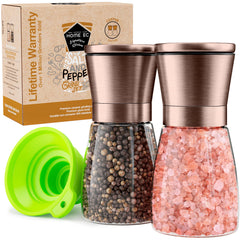
How to Choose the Right Salt and Pepper Grinder Set (And Actually Use It Well)
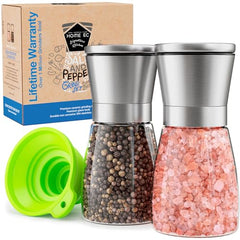
How to Open a Pepper Grinder to Refill It (Without Breaking Anything)