Ceramic Cookware Benefits vs Traditional Nonstick: What's Actually Worth Your Money
There's a quiet revolution happening in kitchens right now, and it has everything to do with what's coating your pans. If you've been cooking on traditional nonstick for years — the classic dark Teflon-style surface — you've probably noticed how quickly those pans degrade. A year, maybe two, and the coating starts flaking, food begins sticking in patches, and you're back at the store buying replacements. Understanding ceramic cookware benefits vs traditional nonstick isn't just a trendy debate. It's a practical decision that affects your food, your health, and how much you spend over time.

What Exactly Makes Ceramic Cookware Different?
When people say "ceramic cookware," they're usually talking about pans and pots coated with a sol-gel coating derived from silica (sand). It's inorganic, which means it doesn't contain the carbon-based compounds found in traditional nonstick coatings like PTFE — the stuff most of us know by the brand name Teflon.
Traditional nonstick relies on polytetrafluoroethylene, a synthetic fluoropolymer that creates a slippery surface. It works beautifully at first. Eggs slide right off. Cleanup takes seconds. But PTFE starts breaking down at temperatures above roughly 500°F (260°C), and when it does, it can release fumes that aren't great to breathe in. The EPA phased out PFOA — a chemical previously used to manufacture PTFE coatings — back in 2015, but concerns about newer processing agents linger.
Ceramic coatings, on the other hand, can typically handle higher heat without off-gassing. They're free of PTFE, PFOA, and PFAS entirely. That's a meaningful distinction if you ever accidentally leave a pan on a hot burner (and honestly, who hasn't?).
How Does the Nonstick Performance Actually Compare?
Here's where things get honest. Brand-new traditional nonstick pans are incredibly slick — more slick than most ceramic coatings out of the box. If all you care about is that first-month egg-sliding experience, PTFE wins that narrow contest.

But nonstick performance isn't about day one. It's about day 300. Traditional PTFE coatings degrade steadily with regular use, and they're especially vulnerable to metal utensils, high heat, and dishwasher cycles. Most manufacturers recommend replacing them every one to two years.
Ceramic coatings lose some slickness over time too — no coating is immortal. But they tend to hold up better against heat damage and don't carry the same risk of releasing harmful compounds as they wear down. When a ceramic pan eventually stops performing, you're dealing with a surface that's less slippery, not one that's potentially flaking synthetic material into your scrambled eggs.
The Health Angle: Is Ceramic Really Safer?
This is the question that drives most people to start researching ceramic cookware benefits vs traditional nonstick in the first place. And the short answer is: ceramic coatings eliminate several specific concerns that come with PTFE.
No PFAS. No PTFE. No risk of polymer fume fever (yes, that's a real thing — it happens when PTFE is overheated and the fumes are inhaled). For households with pet birds, this matters even more. Birds have extremely sensitive respiratory systems, and overheated PTFE pans have been documented to cause fatal reactions in parrots and other pet birds. Ceramic coatings don't carry that risk.
Does that mean every ceramic pan on the market is perfectly safe? Not necessarily. Cheaper ceramic cookware sometimes uses lead or cadmium in the glaze — particularly imported products without clear certification. Look for brands that explicitly test for and exclude heavy metals.
What About Durability and Everyday Use?
Ceramic cookware handles heat distribution well, browns food more evenly than you'd expect from a nonstick surface, and cleans up easily with warm soapy water. You can typically use it in the oven up to around 450°F, depending on the brand and handle construction.
The main knock on ceramic? It can chip if you bang pans together in a cabinet or drop them on a tile floor. It's tougher than people assume, but it's not cast iron. Treat it with basic respect — don't stack heavy things on top without padding — and it'll serve you well for years.

Seasoning Matters as Much as Your Pan
Here's something that gets overlooked in the cookware debate: the best pan in the world can't fix bland food. Once you've upgraded your cookware, your next move should be upgrading how you season. Pre-ground pepper and iodized table salt do the bare minimum. Freshly cracked peppercorns and properly ground sea salt? That's where flavor actually lives.
A quality grinder with a ceramic mechanism gives you control over grind size — fine for a cream sauce, coarse for a dry rub — and won't corrode the way metal burrs do when exposed to salt crystals over time.

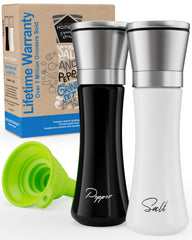
Home EC Salt and Pepper Grinder Set 2pk-Tall
Ceramic grinding mechanisms that won't corrode from salt, with adjustable coarseness for everything from fine finishing salt to cracked pepper. The tall body holds enough that you're not refilling mid-recipe.
Shop Now →
Home EC Salt and Pepper Grinder Set 2pk-Tall - Copper
Same ceramic grinding internals in a copper-accented finish that looks genuinely good sitting next to modern cookware on your counter. Form and function in one piece.
Shop Now →So Which Should You Buy — Ceramic or Traditional Nonstick?
If you cook at moderate to high heat regularly, care about avoiding synthetic chemical coatings, or just want something that degrades gracefully instead of flaking apart, ceramic cookware is the smarter pick. You'll pay a bit more upfront for a good ceramic pan, but you'll replace it less often — and you won't be second-guessing what's ending up in your food.
Traditional nonstick still has a place for very specific tasks (delicate fish, low-heat crepes) where that ultra-slick PTFE surface genuinely helps. But for your everyday workhorse pan? Ceramic makes more sense for most home cooks in 2026.

Home EC Salt and Pepper Grinder Set 4pk - Short
Four grinders for dedicated spices — black pepper, white pepper, Himalayan salt, smoked salt — so you're never fumbling when you need a specific grind. Compact enough to fit a tight counter setup.
Shop Now →The cookware you use and the way you season your food are two halves of the same coin. Get both right, and every meal you make — even a Tuesday-night stir-fry — tastes noticeably better. That's not hype. That's just how cooking works when you stop settling for the cheap stuff.
Related Posts
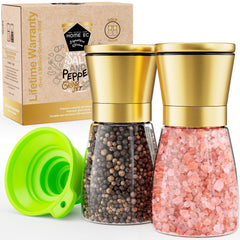
The Best Salt for Grinder Use: How to Choose, Fill, and Get a Perfect Grind Every Time
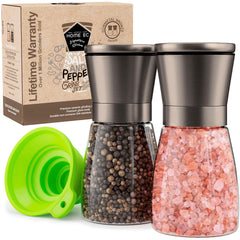
The Best Peppercorns for Grinding: What to Buy and Why It Actually Matters