Ceramic Cookware vs Stainless Steel: Which Is Actually Better for Your Kitchen?
Here's a question that comes up constantly among home cooks who are serious about their gear: ceramic cookware vs stainless steel, which is better? And the honest answer is that it depends — but not in the vague, non-committal way that phrase usually gets used. It depends on how you cook, what you cook, and what trade-offs you're actually willing to live with every day at the stove.

Both materials have real strengths. Both have genuine limitations. The cooks who end up frustrated are usually the ones who grabbed one or the other without understanding what they were signing up for. So let's get into it properly.
What Each Material Actually Is
Stainless steel cookware is exactly what it sounds like — pots and pans made from an alloy of steel, chromium, and often nickel. The chromium is what makes it "stainless": it forms a passive oxide layer on the surface that resists rust and corrosion. Most quality stainless pans have an aluminum or copper core sandwiched in the base to help with heat distribution, since stainless on its own is a mediocre heat conductor.
Ceramic cookware is a different animal entirely. When people say ceramic, they almost always mean metal pans — typically aluminum — coated with a sol-gel layer derived from silica (essentially sand). It's inorganic, free from PTFE and PFAS chemicals, and it creates a naturally slick cooking surface without the synthetic fluoropolymer chemistry that made old-school Teflon controversial.
So you're not comparing apples to apples here. You're comparing a bare-metal cooking surface with a coated one. That distinction shapes everything else.
How They Each Handle Heat
Stainless steel can take punishment. You can crank it to screaming hot, slide it into a 500°F oven, hit it with a broiler, and it won't flinch. That high-heat tolerance is exactly why restaurant kitchens run almost exclusively on stainless — you can sear a steak, deglaze with wine, and finish in the oven all in the same pan without worrying about damaging the surface.
Ceramic coatings are more sensitive to temperature swings. Most manufacturers recommend keeping the heat at medium or below for everyday cooking, and avoiding thermal shock — like pulling a hot pan straight off the burner and running it under cold water. The coating itself is durable under normal conditions, but extreme heat or sudden temperature changes can shorten its lifespan noticeably.

That said, ceramic's moderate heat tolerance isn't necessarily a disadvantage for most home cooking. Sautéed vegetables, eggs, fish fillets, pancakes, sauces — none of that requires blazing high heat. If you're not doing serious searing or oven finishing on the regular, ceramic's heat range probably covers 90% of what you actually cook.
The Nonstick Question — and Why It Matters More Than You Think
This is where ceramic has a clear edge for a specific type of cook. A well-maintained ceramic pan is genuinely nonstick straight out of the box. Eggs don't stick. Fish doesn't tear. Cleanup takes about thirty seconds with a soft sponge. For anyone who dreads scrubbing pans at the end of a long day, that's not a small thing.
Stainless steel is the opposite — notoriously sticky if you don't handle it right. The trick is preheating the pan properly and adding oil at the right moment (the mercury ball test, if you've heard of it: water droplets that skitter across the surface in a single bead mean the pan is ready). Get it right and stainless becomes reasonably non-stick for most foods. Get it wrong and you've got scrambled eggs welded to your pan.
There's also a longevity angle here. Ceramic coatings do wear over time — typically two to five years with regular use before the nonstick performance starts declining. Stainless steel, if you buy quality, can last decades. Generations, even. It's not unusual to inherit a stainless pan from a parent and find it works just as well as the day it was made.
Health and Safety: Where Ceramic Has the Stronger Story
If you're thinking about what's actually going into your food, ceramic is the cleaner choice. No PTFE means no risk of polymer fume fever if the pan overheats. No PFAS means none of the "forever chemicals" that researchers have linked to health concerns over prolonged exposure. The silica-based coating is inert — it doesn't react with food, acidic sauces, or high heat in ways that raise flags.
Stainless steel is also considered safe, and for most cooking it is. But there's a nuance: stainless can leach small amounts of nickel and chromium into food, especially when cooking acidic dishes like tomato sauce for extended periods. For most people, this isn't a meaningful health concern. For anyone with a nickel sensitivity or allergy, it's worth knowing.

Which One Should You Actually Buy?
If you cook mostly weeknight meals — stir-fries, eggs, pasta, pan sauces — and you want something forgiving, easy to clean, and free from chemical coating concerns, ceramic is the smarter everyday choice. It rewards less technical cooks and still produces genuinely good results across a wide range of dishes.
If you cook restaurant-style — hard sears, fond-building, oven finishing, and you're willing to learn proper technique — stainless earns its place. It's the longer-term investment, the pan that outlives trends and lasts as long as you take care of it.
Honestly? A lot of serious home cooks end up with both. A ceramic skillet for eggs and delicate fish in the morning, a stainless sauté pan for building sauces and deglazing in the evening. They're not really competing — they solve different problems.
While You're Thinking About Your Kitchen Setup
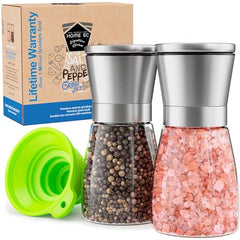
If you're rethinking your cookware, it's usually a good time to look at the rest of your setup too. A quality salt and pepper grinder sits on every serious cook's counter, and the right set makes a noticeable difference in how you season as you cook — precise, consistent grinds rather than the dusty pre-ground stuff that goes flat in weeks.

Home EC Salt and Pepper Grinder Set 2pk-Tall — Copper
The warm copper finish looks sharp on any counter, and the tall profile gives you a comfortable grip when you're grinding over a hot pan. Adjustable ceramic mechanisms mean you control exactly how coarse or fine your seasoning lands.
Shop Now →
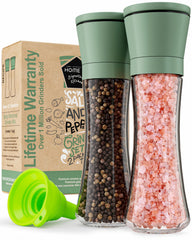
Home EC Salt and Pepper Grinder Set 2pk-Tall — Green
If you want a set that adds a little personality without being loud about it, this muted green finish does exactly that — it's earthy, modern, and works particularly well alongside ceramic cookware's clean aesthetic. Tall enough for a satisfying grip, well-balanced in the hand.
Shop Now →The ceramic cookware vs stainless steel debate doesn't have a universal winner. What it has is a right answer for your kitchen, your habits, and the way you actually cook. Figure that out first, and the choice gets a lot easier.
Related Posts
How to Adjust the Coarseness on a Pepper Grinder (And Why It Actually Matters)

How to Refill a Salt and Pepper Grinder (Without the Mess or the Guesswork)