Ceramic vs Metal Grinder Mechanism: Which One Actually Works Better?
You probably haven't thought much about what's inside your salt or pepper grinder. Most people don't — until it starts jamming, grinding unevenly, or producing nothing but dust when you want coarse flakes. That's the moment the ceramic vs metal grinder mechanism question stops being abstract and becomes very practical. The mechanism is the whole point. Everything else — the body, the finish, the cap — is just housing for the thing that actually does the work.
What a Grinder Mechanism Actually Does
At its core, a grinding mechanism is two burrs — one fixed, one rotating — that crush whatever you put above them into whatever size you dial in below. The tighter the gap, the finer the grind. Wider gap, coarser result. Simple in theory. But the material those burrs are made from determines how well the whole system holds up over time.
Most grinders use either a ceramic burr set or a stainless steel one. Both can grind salt and pepper effectively right out of the box. The real difference shows up after months of daily use — and in how each material handles the specific conditions inside a grinder.
Why Ceramic Wins on Longevity
Salt is corrosive. That's not an exaggeration — it's chemistry. Metal mechanisms are vulnerable to moisture, and even the humidity in a kitchen can cause a steel burr to start oxidizing over time. Once rust gets into the grinding surfaces, your grinder stops producing clean, consistent grinds and starts contaminating everything it touches.
Ceramic doesn't rust. It's chemically inert, which means it won't react with salt, moisture, or anything else you're grinding. The burr stays sharp because ceramic is an extremely hard material — harder than most metals used in budget and mid-range grinders. That hardness translates directly into consistency: you get the same grind quality on year three that you got on day one.
There's also a flavor argument. Ceramic doesn't leach any metallic taste into your seasoning. With a corroded or low-quality steel mechanism, there's a real risk of that dull, slightly off flavor making its way into your food. Ceramic is completely neutral. What goes in comes out tasting exactly like it should.

The Case for Metal Mechanisms
To be fair, not all metal mechanisms are equal — and well-made stainless steel burrs are genuinely solid. High-grade stainless resists corrosion far better than cheap carbon steel, and in a quality grinder, a steel mechanism can last for years without serious issues.
Metal mechanisms also tend to perform well with harder peppercorns and larger spice pieces that might chip or crack a ceramic burr under extreme pressure. Ceramic is hard but brittle — drop a ceramic burr on a tile floor and it can crack. Metal is more forgiving if the grinder takes a tumble.
The catch is that the grinders using truly high-grade stainless mechanisms tend to be expensive. The ones at the affordable end of the market often use lower-quality steel that dulls faster and rusts sooner than the packaging suggests. You're essentially gambling on how good the steel actually is, which isn't information most brands make easy to find.
Which One Should You Actually Buy?
For everyday salt and pepper grinding, ceramic wins. It handles the most common failure point — corrosion from salt — without any compromise. It stays sharp longer, grinds more consistently, and doesn't ask anything from you in terms of special maintenance or care. You fill it, you grind, you're done.
The one scenario where you might lean toward a quality steel mechanism is if you're grinding very coarse, dense whole spices regularly — things like dried chilis or whole allspice. For dedicated salt and pepper grinders that live on your counter and get used at every meal, ceramic is the smarter long-term choice.

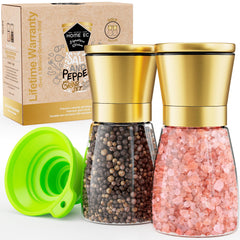
Home EC Salt and Pepper Grinder Set 2pk-Tall Gunmetal Top
A ceramic mechanism inside a matte gunmetal finish — this set is built to grind consistently for years without the corrosion risk that kills cheaper steel mechanisms. The tall body holds a generous amount and the adjustable coarseness dial actually works.
Shop Now →What to Look for When You're Shopping
Mechanism material isn't always clearly listed. Some brands bury it in the fine print; others don't mention it at all. When in doubt, look for explicit mentions of a ceramic burr or ceramic grinding core. If a product listing only talks about the exterior finish and doesn't say anything about what's inside, that's usually a sign the mechanism is generic steel.
Adjustable coarseness is the other thing worth checking. A good mechanism — ceramic or steel — should let you move between fine and coarse without the dial feeling loose or skipping. If the adjustment is just a knob that spins freely with no real tension, the internal tolerances probably aren't tight enough to give you meaningful control.
Weight and grip matter too. A grinder that's too light feels cheap and can be hard to twist with one hand when your other hand is holding a pan. A little heft means the burr set has real material to work with — and it just feels better to use.

Don't Overlook the Grinder Body While You're At It
Once you've confirmed the mechanism material, the body comes down to preference. Glass lets you see fill levels at a glance. Acrylic is lighter and shatter-resistant. Stainless steel and matte-finish exteriors are the most forgiving in terms of fingerprints and kitchen wear.
The finish you choose affects how the grinder ages on your counter — not just how it looks the day it arrives. Matte and brushed finishes tend to hide minor scratches better than polished ones. If your kitchen runs warm or steamy, a material that doesn't show water spots is worth thinking about.

Home EC Salt and Pepper Grinder Set 2pk-Tall Diamond Facet
The faceted body catches light in a way that makes it look far more expensive than it is — and the ceramic mechanism inside means the grinding quality matches the looks. A genuinely nice set that earns its place on a counter you care about.
Shop Now →The Bottom Line on Mechanism Material
The ceramic vs metal grinder mechanism debate isn't really close for most home cooks. Ceramic handles salt's corrosive nature without blinking, stays sharper over time, and never introduces off flavors into your seasoning. A quality stainless burr can compete — but you need to actually know it's quality steel, and that's information most brands don't make easy to verify.
The safer bet is to start with ceramic and not think about it again. A grinder should work every single time you pick it up. Get the mechanism right, and the rest of the decision — finish, size, style — becomes the fun part.
Related Posts
How to Choose the Right Salt and Pepper Grinder Set (And Actually Use It Well)
How to Open a Pepper Grinder to Refill It (Without Breaking Anything)