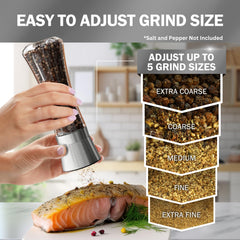
How to Adjust the Coarseness on a Pepper Grinder (And Why It Actually Matters)
If you've ever twisted your pepper grinder and ended up with either a pile of fine dust or chunky peppercorn fragments that crunch under your teeth, you already know the coarseness setting isn't just a minor detail. Knowing how to adjust the coarseness on a pepper grinder properly — and understanding when to use each setting — is the difference between seasoning that disappears into a dish and pepper you can actually taste.

How the Coarseness Mechanism Actually Works
Almost every manual pepper grinder uses a ceramic or carbon steel burr mechanism — two grinding surfaces that press together and crush the peppercorns as you twist. The gap between those two surfaces is what controls coarseness. Widen the gap and you get bigger, chunkier pieces. Narrow it and the peppercorns get pulverized into something closer to pre-ground powder.
The adjustment point is almost always at the top of the grinder — specifically, the knob or nut sitting right at the cap. That's the piece you turn to change the grind. Turning it clockwise tightens the burrs (finer grind); counterclockwise loosens them (coarser grind). Most grinders follow this convention, though it's worth a quick check on yours if you're unsure.
Some grinders have numbered dials or etched markers so you can see exactly where you're set. Others are stepless — smooth and continuous, with no clicks or markings. Both work well. The stepless ones just require a little more feel and experimentation to nail your preferred setting.
Step-by-Step: How to Adjust the Coarseness on a Pepper Grinder
Start with the grinder upright — cap on top, grinding end pointing down. Hold the main body steady with one hand so you're only moving the top adjustment piece, not the whole grinder.
Grip the top knob or cap and rotate it slowly. You don't need to crank it hard. A quarter turn is often enough to notice a meaningful difference in grind size. If your grinder has click stops, each click typically represents one coarseness level.
Give it a few test grinds over a piece of white paper or a plate so you can actually see what's coming out. That's the fastest way to calibrate — visual feedback beats guessing every time. Adjust again if needed, test again, and repeat until you hit the texture you're after.

Which Coarseness Setting Should You Actually Use?
This depends entirely on what you're cooking — and it's worth thinking about rather than leaving the grinder on whatever setting it shipped with.
Fine grind: Best for sauces, soups, salad dressings, and anything where you want pepper fully incorporated without any texture. Also good for eggs, where bigger pieces can feel gritty. Fine-ground pepper dissolves into food rather than sitting on top of it.
Medium grind: The everyday workhorse. Works on pasta, roasted vegetables, grilled chicken, most dinner plates. You get clear pepper flavor without the crunch of a coarse grind. If you only ever use one setting, this is the one.
Coarse grind: This is where pepper gets bold. Steaks, burgers, thick-cut fish, fresh tomatoes with olive oil — coarse-ground pepper adds real bite and aroma. It also looks intentional on the plate, which matters more than people admit.
There's no wrong answer here, but there's definitely a mismatch if you're adding coarse-cracked pepper to a delicate cream sauce or dusting fine powder over a ribeye you're trying to crust.

Home EC Salt and Pepper Grinder Set 2pk-Tall — Copper
The adjustable ceramic burr mechanism on this copper-topped grinder gives you genuine control from fine to coarse — and the warm copper finish looks sharp on any counter.
Shop Now →Why Your Grinder Might Not Be Adjusting Properly
If you turn the adjustment knob and nothing seems to change, there are a few likely culprits. The most common one: the grinder is overfilled. When the chamber is packed too tightly, peppercorns can't flow freely through the burrs no matter what the gap setting is. Empty it down to about two-thirds full and try again.
Moisture is another problem. Peppercorns that have absorbed humidity clump together and resist grinding evenly. If yours have been sitting in a humid kitchen for a while, swap them out for fresh, dry whole peppercorns and you'll notice an immediate improvement in how smoothly the mechanism moves through its coarseness range.
And if the top knob spins freely without any resistance — like it's not engaging anything — the center rod that connects the cap to the burr assembly may have worked loose. Some grinders let you hand-tighten this from inside the chamber. If yours doesn't, it's worth contacting the manufacturer or replacing the unit, because a grinder that can't hold a coarseness setting is just frustrating to use.

Getting More Consistent Results Every Time
One habit that makes a real difference: set your coarseness before you fill the chamber, not after. When the grinder is empty or nearly empty, the burrs move more freely and you get a truer sense of the gap you're dialing in. Adjusting on a full grinder can feel stiff and give you inaccurate feedback.
It also helps to write down (or just remember) where your sweet spot is. If your grinder has a numbered dial, note the setting you keep coming back to. If it's stepless, count the quarter-turns from fully tight. Sounds fussy, but it saves you from re-calibrating every time you refill.
Use whole peppercorns, not pre-cracked ones. Pre-cracked pepper has already lost most of its volatile oils — the stuff that makes freshly ground pepper actually taste like something. Whole black peppercorns, Tellicherry if you can find them, give you the most to work with at any grind setting.

Home EC Salt and Pepper Grinder Set 2pk-Tall — Green
An adjustable ceramic burr mechanism paired with a distinctive matte green finish — it holds its coarseness setting reliably and adds a bit of personality to the table.
Shop Now →One Last Thing Worth Knowing
Coarseness and grind speed aren't the same thing. A finer setting requires more torque — more effort per turn — because the burrs are closer together and doing more work on each peppercorn. If your fine grind feels harder to turn than your coarse setting, that's completely normal. You haven't over-tightened anything; the mechanism is just working harder.
That said, if it feels like you're straining to turn the grinder at any setting, check for peppercorn fragments lodged in the burrs. A quick dry brush-out (no water) usually fixes it. A clean, properly filled grinder with fresh peppercorns should feel smooth across the full coarseness range — never forced, never frustrating.
Once you've got the hang of adjusting it, you'll probably wonder why you left it on the default setting for so long. Fresh pepper dialed to the right coarseness for what you're actually cooking is one of those small things that quietly makes everything taste better.
Related Posts
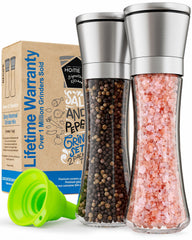
What to Know Before Buying a Stainless Steel Salt and Pepper Grinder Set
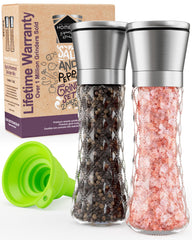
Why a Ceramic Salt and Pepper Grinder Beats Every Other Kind