How to Refill a Salt and Pepper Grinder (Without the Mess or the Guesswork)
Refilling a salt and pepper grinder should take about two minutes. And yet somehow it ends up being the thing people Google at 6pm with dinner on the stove, grinder in one hand and a bag of peppercorns in the other. If that's you right now — welcome. Here's everything you need to know about how to refill a salt and pepper grinder, done right the first time.

First, Figure Out How Your Grinder Opens
Not all grinders open the same way, and forcing the wrong end is how people strip caps and crack acrylic bodies. Take ten seconds to look at yours before you do anything.
Most refillable grinders open from the top — you unscrew the cap (usually the knob or metal top piece) counterclockwise, and the chamber is right there waiting. Some models have a bottom-fill design where the base unscrews instead. A small number have a slide-off cap or a rubber stopper. If you're not sure, check the product page or any included instructions before you muscle it open.
The cap threading can be tight if it's a new grinder or if salt residue has built up around the rim. That's normal. A firm, steady counterclockwise turn should do it — don't crank it.
What to Put In (And What to Skip)
For pepper grinders, whole peppercorns are the only answer. Black, white, pink, mixed blends — all fair game. Pre-ground pepper will clog the mechanism almost immediately. It's too fine, it clumps, and it'll ruin the burrs over time.
Salt grinders need coarse salt — rock salt, sea salt flakes, Himalayan pink salt. These have the grain size and structure the grinding mechanism is actually designed to crush. Fine table salt is the enemy here. It bypasses the grinder entirely, pours straight through, and can accelerate corrosion in steel mechanisms because it holds moisture so well.
Kosher salt is a gray area. Some coarse kosher salt works fine; the flakier varieties can be too soft and flat to grind well. When in doubt, go for something labeled specifically as coarse or rock salt.

How to Actually Refill It Without Making a Mess
This is where most people go wrong. They try to pour straight from the bag, overshoot, and end up with peppercorns rolling across the counter and down the back of the stove. Here's a cleaner approach.
Set the grinder on a flat surface with the opening facing up. Use a small funnel if you have one — even a folded piece of paper shaped into a cone works perfectly. Pour slowly, stopping about two-thirds of the way up the chamber. That gap at the top isn't wasted space; it gives the contents room to shift and the mechanism room to work.
Overfilling is a real problem. When you pack a grinder completely full, the contents press against the grinding mechanism from below and create resistance. The grind feels stiff, the adjustment knob gets hard to turn, and you end up thinking something's wrong with the grinder when really it just needs a little breathing room.
Once you've filled it to the two-thirds mark, screw the cap back on clockwise — snug, not overtightened. Give it a few test grinds over a sheet of paper to confirm everything's moving freely before you put it back on the table.

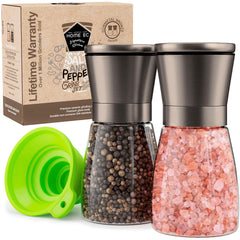
Home EC Salt and Pepper Grinder Set 2pk-Tall — Gunmetal Top
The wide-mouth opening on these tall gunmetal grinders makes refilling genuinely easy — no funnel required. The ceramic mechanism handles everything from coarse Himalayan salt to mixed peppercorn blends without complaint.
Shop Now →Adjusting the Coarseness After a Refill
Here's something worth knowing: the coarseness setting can shift slightly when you refill a grinder, especially if you're switching salt or pepper types. A finer salt will grind differently than a chunkier rock salt even at the same setting.
After refilling, do a quick test grind and actually look at what comes out. Too coarse? Tighten the adjustment knob slightly (usually clockwise on the base or the top cap, depending on the design). Too fine or dusty? Loosen it a turn. It only takes a few seconds to dial in, and it's worth doing rather than seasoning everything with the wrong grind for the next three weeks.
How Often Should You Refill?
That depends entirely on how much you cook, but a two-pack of reasonably sized grinders used daily in a household of two to four people typically needs refilling every four to eight weeks. If you're going through it faster than that, you might just be underseasoning before the refill and overcorrecting after — totally normal.
A good habit: refill when you're at about a quarter-full, not bone-empty. Running the grinder on the last few grains creates friction without much to actually grind, which puts unnecessary wear on the mechanism over time.

Should You Clean It Before Refilling?
You don't need to clean it every time — but every three or four refills is a good rhythm to do a quick dry clean. Empty whatever's left, brush out the chamber with a dry pastry brush or soft-bristled toothbrush, and wipe the outside down. No water inside the mechanism, ever.
Salt in particular leaves a residue that can gum up the burrs slowly over time. Staying ahead of it means you never have to deal with a grinder that suddenly feels like it's grinding through wet concrete.

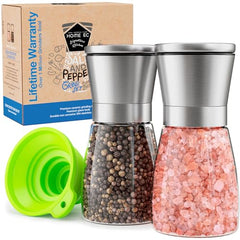
Home EC Salt and Pepper Grinder Set 2pk-Tall — Diamond Facet
A solid everyday option with a striking faceted body and a clear chamber so you can actually see when it's time to refill — no more guessing or shaking to check the level.
Shop Now →When It's Time for a New Grinder
If you're refilling correctly, using the right salt or pepper, and the grinder still feels rough, inconsistent, or plain broken — the mechanism itself may be done. Ceramic burrs are durable, but they're not indestructible. Steel mechanisms in contact with salt are even more vulnerable if they've been exposed to moisture repeatedly.
The good news is that replacing a grinder doesn't have to mean spending a lot. A well-made set under $25 with a quality ceramic mechanism will outlast most kitchens if you treat it right — and now you know exactly how to do that.
Related Posts
How to Open a Pepper Grinder to Refill It (Without Breaking Anything)
The Best Salt for Grinder Use: How to Choose, Fill, and Get a Perfect Grind Every Time