How to Care for Ceramic Cookware So It Lasts for Years (Not Months)
Ceramic cookware has a reputation problem — not because it's bad, but because a lot of people burn through a set in under a year and assume that's just how it goes. It isn't. The truth is that ceramic coatings are genuinely durable when you treat them right, and genuinely fragile when you don't. Learning how to care for ceramic cookware so it lasts is mostly about understanding what's actually happening to that coating — and a few habits that make a real difference.

What's Actually Happening When Ceramic Coating Wears Out
The nonstick surface on a ceramic pan isn't some magical permanent layer. It's a sol-gel coating — essentially a thin, hard mineral film derived from silica — bonded to an aluminum pan body. It's smooth, inorganic, and free from PTFE and PFAS chemistry. But it's also thinner than most people realize.
When that surface degrades, it usually happens gradually. Tiny scratches accumulate. Residue bakes in from high heat. The surface loses its slickness in patches. By the time you're scrubbing eggs off the bottom, the coating has already been compromised for a while — you just didn't notice the slow decline.
Most ceramic cookware doesn't fail dramatically. It fades. And understanding that helps you stop the fade before it starts.
The Heat Mistake Almost Everyone Makes
This is the big one. Ceramic coatings do not like extreme heat — and they definitely don't like sudden swings from cold to blazing hot. Cranking a burner to high under a ceramic pan is one of the fastest ways to shorten its life, full stop.
The aluminum body of the pan expands quickly when it heats up. The ceramic coating, being a different material, expands at a slightly different rate. Over time, aggressive high-heat cooking creates microscopic stress in the bond between the coating and the pan. You won't see cracks. But the nonstick performance will quietly deteriorate.
Medium heat is the sweet spot for ceramic cookware. It's actually plenty for the vast majority of everyday cooking — sautéed vegetables, scrambled eggs, pan sauces, seared chicken thighs. Save the screaming-hot sear for a cast iron or stainless pan. Let ceramic do what it does best.
Also: always let the pan come to room temperature before you put it on a burner. Pulling a cold pan from the fridge and dropping it onto a preheated flame is a thermal shock the coating doesn't enjoy.

Why You Should Never Put Ceramic Cookware in the Dishwasher
Yes, some ceramic pans are technically labeled dishwasher-safe. Do it anyway, and you'll regret it within a few months. The combination of high water temperature, harsh detergent chemistry, and prolonged heat exposure during the drying cycle is genuinely punishing on ceramic coatings.
Dishwasher detergents are alkaline and abrasive by design. They're built to strip grease off porcelain plates, not coddle a delicate mineral film. Regular dishwasher use causes the coating to dull and lose its nonstick quality faster than almost any other single habit.
Hand washing takes thirty seconds. Warm water, a soft sponge, a drop of dish soap — done. That's the whole ritual. It's the single easiest thing you can do to double the working life of a ceramic pan.
The Right Tools Matter More Than You Think
Metal utensils and ceramic coatings are a bad combination. A metal spatula dragged across the surface even once leaves micro-scratches. Do it fifty times over a few months and you've created a rough surface that sticks, burns, and cleans poorly.
Silicone and wood are the right choice here. Silicone spatulas flex and don't drag. Wooden spoons are gentle and won't scratch. They're not just nice-to-haves — they're part of how you protect an investment you've already made.
Same logic applies to storage. Stacking ceramic pans bare inside each other is asking for surface scratches. A pan protector between stacked pans, or hanging them separately, keeps the coating looking and performing like new.

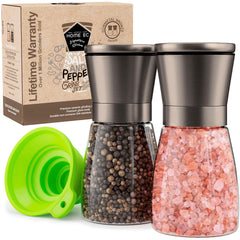
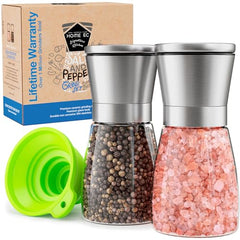
Home EC Salt and Pepper Grinder Set 4pk – Tall
A well-seasoned dish starts before it hits the pan. This four-pack keeps freshly ground salt and pepper within arm's reach at the stove — exactly where you need them during a careful, medium-heat ceramic cook.
Shop Now →How to Clean a Ceramic Pan Properly (Including Stubborn Spots)
If something sticks or burns onto your ceramic pan — and eventually something will — don't attack it with steel wool or the abrasive green side of a sponge. That's how you turn a minor incident into permanent damage.
Instead, fill the pan with warm water and a small squeeze of dish soap and let it sit for ten to fifteen minutes. The stuck residue almost always loosens on its own. Then a soft sponge clears it without any real effort or scratching.
For tougher buildup, a paste of baking soda and water applied with a soft cloth works well without being abrasive. Leave it on the spot for a couple of minutes before wiping away. That's genuinely all you need — no specialized ceramic cookware cleaner required.
Seasoning: The Step Most People Skip
Ceramic pans benefit from occasional light seasoning, even though they're not cast iron. A thin wipe of neutral oil — sunflower, vegetable, or refined coconut — applied with a paper towel to a warm pan helps condition the surface and keeps it performing well.
Do this when the pan is new before the first use, and then every few months during normal use. It takes two minutes. The oil fills in the tiniest surface irregularities and acts as a kind of maintenance layer for the coating. It's the difference between a pan that's still genuinely nonstick at the eighteen-month mark and one that's been quietly struggling since month six.

When It's Time to Replace
Even a well-cared-for ceramic pan has a finite life. When the coating starts flaking or peeling — not just losing nonstick performance, but visibly deteriorating — it's time to retire it. A worn, sticky ceramic surface is frustrating to cook on and not worth fighting.
But here's the thing: if you follow the habits above, you're not looking at replacement in a year. You're looking at two, three, even four years of solid performance from a good-quality pan. The people who replace ceramic cookware constantly are almost always making the same few avoidable mistakes.

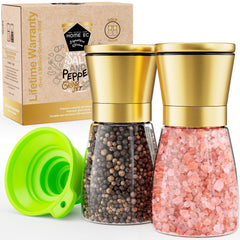
Home EC Salt and Pepper Grinder Set 2pk – Tall Gold Top
The gold-top finish looks sharp on any countertop, and having a dedicated grinder set on the stove means you're seasoning food at the right moment — while it's still in the pan and the heat is doing its job.
Shop Now →Care for ceramic cookware so it lasts and it will. The coating isn't fragile — it's just specific about how it wants to be treated. Moderate heat, gentle cleaning, the right utensils, and a little occasional oil. That's honestly the whole playbook. Get those four things right, and your ceramic pans will stay genuinely nonstick long after the ones neglected in other kitchens have already been thrown out.
Related Posts
How to Open a Pepper Grinder to Refill It (Without Breaking Anything)
The Best Salt for Grinder Use: How to Choose, Fill, and Get a Perfect Grind Every Time