How to Clean a Salt and Pepper Grinder Properly (And Why Most People Get It Wrong)
Salt and pepper grinders are one of those kitchen tools people use every single day but almost never actually clean. You twist, you season, you set it back on the counter — and that's the whole relationship. Until one day the grinder starts sticking, or the pepper comes out tasting flat and dusty, or you notice something suspicious caked around the mechanism. Learning how to clean a salt and pepper grinder properly is genuinely simple, but there's one mistake almost everyone makes that can wreck the grinder for good.


Step 2: Use a Dry Brush, Not Water
This is where most people go wrong. The instinct is to rinse everything under the faucet. Resist it. Instead, use a small, stiff-bristled dry brush — an old toothbrush or a pastry brush works well — to scrub out the grinding chamber and around the burr mechanism.
Work in short, firm strokes to dislodge any packed-in residue. For salt grinders especially, you'll often find hard little clumps stuck in the mechanism where humidity has gotten in. A wooden skewer or toothpick is useful for breaking those apart before brushing them out.
For the exterior of the grinder body — whether it's acrylic, glass, or has a metal top — a damp cloth is fine. Just keep the moisture away from the grinding mechanism itself.
Step 3: If You Must Use Water, Dry Immediately and Thoroughly
Sometimes the residue buildup is stubborn enough that dry brushing alone won't cut it. In that case, a very quick rinse under lukewarm water is acceptable — but you need to dry the grinder immediately and completely before reassembling it.
Shake out as much water as you can, then leave the grinder disassembled in a warm, dry spot for at least 24 hours. Some people put it in a very low oven (around 150°F) for 20–30 minutes to speed the process. Whatever you do, don't reassemble it while anything inside is still damp.
Step 4: Reassemble and Test-Grind
Once everything is dry, put the grinder back together and do a few test grinds over a piece of paper or a bowl. This clears out any loose debris still in the mechanism and confirms the grind is flowing smoothly again. Adjust the coarseness setting if needed — sometimes residue buildup can affect the mechanism's tension.

How Often Should You Actually Clean Your Grinders?
For everyday grinders that see regular use, a light dry-brush clean every one to two months is usually enough to keep things running well. A more thorough deep clean — full disassembly, careful brushing, extended drying — is worth doing every six months or so.
If you live somewhere humid, your salt grinder will need more attention than your pepper grinder. Salt absorbs ambient moisture faster than peppercorns do, so clumping and sticking tend to show up there first.
The real trick to less cleaning? Don't grind directly over a steaming pot. That steam finds its way into the mechanism and accelerates every problem described above. Grind into your hand or a spoon first, then add to the pan.
Does the Type of Grinder Change How You Clean It?
Somewhat. Grinders with all-acrylic or glass bodies are the easiest — you can see exactly where residue is building up and target it precisely. Metal-topped grinders look sharp on a counter, but you can't see inside as easily, so it's worth checking the mechanism more regularly.
Ceramic burr mechanisms are slightly more forgiving of occasional moisture than carbon steel ones, but neither should be soaked. The cleaning process is the same either way — dry first, water as a last resort, and always dry thoroughly before reassembling.

Home EC Salt and Pepper Grinder Set 4pk - Short
Four grinders in a compact short profile — two for salt, two for pepper — so you always have a fresh set ready while one is drying after a clean. The clear acrylic bodies make it easy to see exactly when the mechanism needs attention.
Shop Now →
Home EC Salt and Pepper Grinder Set 2pk-Short - Copper
The short profile with a warm copper top is a genuinely handsome pairing on any counter. Easy to disassemble for cleaning and built with a ceramic mechanism that holds up well over time — exactly what you want in a grinder you'll actually maintain.
Shop Now →A Few Things Worth Knowing About Salt vs. Pepper Grinders
Salt and pepper grinders aren't always interchangeable — and using the wrong one can actually damage the mechanism. Salt is corrosive to carbon steel burrs, which is why quality salt grinders use ceramic mechanisms specifically. If your grinder doesn't specify, check the manufacturer's notes before filling it with salt.
Coarse sea salt and Himalayan pink salt are both fine for grinding, but heavily moist salts — like some fleur de sel varieties — will clog a mechanism quickly no matter how well you maintain it. If you love that kind of finishing salt, a pinch bowl is a better fit than a grinder.
Pepper grinders are more forgiving in general. Whole black peppercorns are dry, relatively hard, and don't absorb moisture the way salt does. Still, they'll leave behind an oily residue over time as the natural oils in the peppercorns coat the mechanism — which is exactly what that dry-brush clean addresses.
A well-maintained grinder lasts years. It rewards you with consistent grinds, better flavor, and a mechanism that doesn't stick halfway through seasoning a steak at 7pm on a Tuesday. The cleaning itself is five minutes of work every couple of months. That's a pretty good trade.
Related Posts
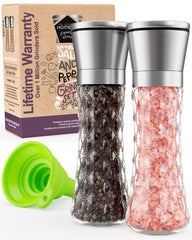
The Best Salt and Pepper Grinder for Arthritis: What Actually Makes a Difference

The Best Ceramic Burr Pepper Grinder: What to Look For and Why It Matters