What to Know Before Buying a Stainless Steel Salt and Pepper Grinder Set
A stainless steel salt and pepper grinder set does something most kitchen accessories never manage: it looks better the longer it sits on your counter. The finish holds up, the weight feels intentional, and every time you reach for it, it just works. But not all stainless sets are built the same way — and buying the wrong one means replacing it in eight months when the mechanism seizes or the cap threads strip out.

This guide is for anyone who wants to get it right the first time. Whether you're outfitting a new kitchen, replacing a grinder that gave up, or hunting for something that holds up to daily use without looking like it belongs in a cafeteria — there's a lot worth knowing before you buy.
Why Stainless Steel Holds Up Where Other Materials Don't
The appeal of stainless steel isn't just visual. Steel is one of the most moisture-resistant metal finishes you can put in a kitchen, which matters more than most people realize. Grinders live right next to the stove, near splattering pans and steam rising from pots. Materials like chrome-plated zinc or painted acrylic can chip, tarnish, or develop a film over time. Stainless just doesn't.
It also wipes clean in one pass. No scrubbing, no worrying about scratching a finish that's already peeling — just a damp cloth and you're done. That kind of low-maintenance durability is exactly what a daily-use kitchen tool should offer.
The weight helps too. A grinder with real heft to it feels controlled in your hand. You're not chasing it across the counter or over-gripping to keep it steady. That small ergonomic detail actually makes you more precise with seasoning, which sounds minor until you've cooked with both and felt the difference.
The Grinding Mechanism Matters More Than the Shell
Here's the thing people miss when they shop on looks alone: the shell is the least important part of any grinder. What's inside — the burr mechanism — determines everything about how it actually performs. A beautiful stainless exterior wrapped around a cheap plastic grinding core is still a cheap grinder.

Ceramic burrs are the benchmark. They don't rust, they don't corrode when they come into contact with salt, and they hold an edge far longer than steel mechanisms do. If you're looking at a grinder set and the material of the grinding mechanism isn't mentioned anywhere in the product details, that's usually a sign the manufacturer isn't proud of it.
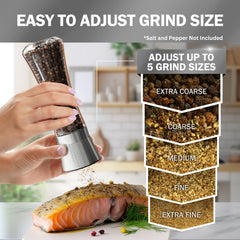
Adjustable coarseness is the other thing worth confirming. A grinder that only produces one grind size is already half as useful as it could be. Flaky sea salt behaves differently than Himalayan pink crystals; fine pepper dust is not the same thing as a coarse crack over a bowl of pasta. You want a set that handles both ends of that range without a fight.
Tall vs. Short: Which Size Actually Works Better for You
Size is more personal than most buying guides admit. Tall grinders — typically around 7 to 8 inches — hold more, look more dramatic on the counter, and feel natural to grip and twist one-handed. They're the right call if you cook frequently, fill them with whole peppercorns often, or just want something that commands a little visual presence on the table.
Shorter grinders are easier to tuck into a crowded spice shelf or pass around the dinner table without knocking things over. They refill a little more often, but some people genuinely prefer the compact feel. If counter space is tight or you're furnishing a smaller kitchen, a short set isn't a compromise — it's just the smarter fit.

Home EC Salt and Pepper Grinder Set 4pk – Short
Four grinders in a compact short profile — ideal if you want a dedicated set for salt and pepper plus a couple of specialty spices, all without crowding your counter.
Shop Now →How to Match the Finish to Your Kitchen
Most stainless steel salt and pepper grinder sets come in a brushed silver finish, which works in almost any kitchen — warm wood tones, cool white cabinetry, dark countertops. It's the most forgiving finish there is. But there's more range available than that if you want something with a little more personality.
Copper tops warm up a kitchen that already leans into natural materials — butcher block, terracotta, open wooden shelving. Gold reads more formal and deliberate, fitting in beautifully with white marble or dark matte surfaces. Gunmetal has a cool, industrial edge that suits modern or minimalist kitchens without trying too hard. The body of the grinder stays glass or acrylic so you can always see what's inside — the finish is just the accent that ties it to everything else on the counter.


Home EC Salt and Pepper Grinder Set 2pk-Short – Copper
The copper top finish brings genuine warmth to the counter — this short two-pack is a smart pick for kitchens that lean into natural tones without wanting something too flashy.
Shop Now →What to Fill Your Grinders With
This is where a lot of people get tripped up. Not everything goes in a grinder. Whole black peppercorns are the obvious choice for the pepper side — avoid pre-ground, which just clogs the mechanism. For salt, you want coarse crystals: kosher salt, sea salt, or Himalayan pink. Fine table salt will either clog or blow straight through without any useful resistance.
One thing worth knowing: never put dried herbs or spice blends containing sugar through a burr grinder. Sugar melts under pressure and can gum up even a high-quality ceramic burr. Stick to pure whole spices — black pepper, white pepper, coriander, and similarly hard round spices all work beautifully.
The Real Test: Consistency Over Time
Any grinder performs well the first week. The real measure is whether it's still grinding evenly six months in — whether the mechanism hasn't seized, the coarseness setting still clicks into place, and the cap hasn't worked itself loose from the thread. That consistency is what separates a $30 set that lasts five years from a $15 set you're replacing before the year is out.
A quality stainless steel salt and pepper grinder set is one of the few kitchen purchases where spending a little more upfront actually saves money. It's a tool you'll touch every single day. That daily contact either compounds into quiet satisfaction or quiet frustration — and the difference between the two usually comes down to the mechanism inside and the durability of what's holding it together.
Know what's inside before you buy. Check the burr material. Confirm the coarseness is adjustable. Pick a finish that you'll still be happy looking at in two years. Get those three things right and you're done shopping for grinders for a very long time.
Related Posts
What Salt to Use in a Salt Grinder (And What You Should Never Put in One)
The Best Salt and Pepper Grinder for Arthritis: What Actually Makes a Difference